
Note: Not at the old Poker1 site. A version of this entry was first published in Poker Player newspaper in 2006.
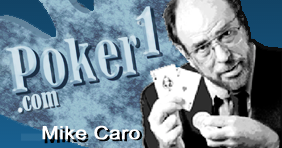
This is part of a series by Diane McHaffie. She wasn’t a poker player when she began writing this series. These entries chronicle the lessons given to her personally by Mike Caro. Included in her remarkable poker-learning odyssey are additional comments, tips, and observations from Mike Caro.
Diane McHaffie is Director of Operations at Mike Caro University of Poker, Gaming, and Life Strategy. She has traveled the world coordinating events and seminars in the interest of honest poker. You can write her online at diane@caro.com.

Lessons from MCU
— With bonus content by Mike Caro (pending) —
Lesson 76: Identifying the bluff
After an opponent has just bet, you ask: “Is he bluffing, or does he really have something good?”
Mike has taught me that if you observe your opponent in a discreet manner, you’ll frequently receive “tells” that can provide the answer. How your opponent appears, or the sounds he makes, can be an indication of how strong or weak his hand is.
Forceful betting
For instance, if your opponent shoves his chips out with more force than necessary when making a bet, he’s probably bluffing. He wants you to be fearful of his strong bet. If he is messy with his chips when betting and tries to straighten the chips afterwards, he’s also probably bluffing. If he doesn’t fix the messy chips, then he’s holding a strong hand. The reason for this is that a player who “fumbles” his chips is afraid that you’ll be suspicious and call. If he’s weak or bluffing, then he’ll often try to undo the damage.
How does your opponent bet? Is it a strong bet or a fearful one? If he bets in an unconvincingly aggressive manner, that usually means weakness. However, if he bets hesitantly, then he is quite likely holding a strong hand. Mike advises against calling a bet that an opponent makes after he shrugs his shoulders and sighs. That opponent wants you to think he has a poor hand and that he’s betting it reluctantly anyway. Don’t fall for it.
Mike says this is reversed against a skilled player making a forceful bet in a belligerent manner. That player wants you to call. He’s trying to fool you into believing he is bluffing.
Afraid to breathe
Suppose a player who bet strongly is now sitting rather stiffly and seems to be holding his breath. Well, Mike has taught me that this represents a blatant “tell.” The player is afraid that if he takes a drink, coughs, or makes any movement (even normal breathing) it might influence you to call. So, call this bet, even if it seems a bit ridiculous or scary at the moment, because that opponent is bluffing. Mike says, “When an opponent actually has a strong hand, he’ll be relaxed and at ease, breathing normally or even excessively. An opponent who is bluffing is afraid to move, or to breathe.”
If an opponent studies his cards a little too long, then later places a bet, he probably is bluffing. When opponents are looking at their cards in such a manner, or continue to refer to them several times, as if to reassure them of what they are holding, you can pretty much assume that they don’t have a strong hand. Someone that glances at his cards and quickly looks away is usually holding a good hand. After all, who is going to forget they are holding a pair of aces? Who needs to check to make sure those two kings are still there? They are going to remember those cards.
If your opponent has been annoying with his persistent whistling and humming, then bets, but ceases when you appear to be calling, he’s probably bluffing. Mike says it’s safe to call that bet, because bluffers freeze in an effort to become less noticeable so you aren’t suspicious.
Sometimes an opponent will try to maintain eye contact with you, but is unable to confidently do so, and instinctively looks away. He’s usually bluffing. If the player is able to maintain eye contact, it often (but not always) means he’s feeling confident.
Smiles make a difference, too.
Even smiles can give a player away. A real smile means your opponent is relaxed and comfortable and is probably holding a strong hand. A fake, weak smile is usually a sign that he’s bluffing. A bluffer is rarely argumentative. He’s going to be friendly, so that he doesn’t antagonize you into calling.
I hope that these tips will be helpful in determining whether your opponents are bluffing. — DM
Next entry in Lessons from MCU series
MEGADEX | “Everything is everywhere!”
Any Poker1 page takes you anyplace you want to go!
↓ Search Poker1 ↓


♠ Poker1 Megadex tools ♠
— main navigation departments —
Collections
Related groups of Poker1 content
↓ Major collections ↓
↓ Tip collections ↓
↓ Contributor collections ↓
↓ More collections ↓
* Any collection followed by an asterisk ( * ) has no entries yet.
Poker1 everything
Browse alphabetically
[a-z-listing display=”posts” post-type=”post”]
Poker1 library
Content in categories
- ALL (newest first)
- Exclude ads
- Private
- SPECIAL INFO
- SPOTLIGHT
≡ Content above: Poker1 Phase2a specification ≡